

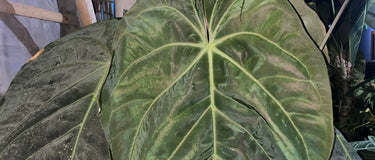
Anthuriums are among the most admired tropical plants in the rare plant community.
With their dramatic foliage, beautiful veins, and diverse leaf shapes, Anthuriums can become the centerpiece of an indoor plant collection.
From velvety foliage species to unusual hybrids, these plants offer an incredible variety of textures and growing habits.
But successful Anthurium care requires an understanding of their environment.
1. Understanding Anthurium Growth
Anthurium is a large genus of tropical plants with a wide range of natural habitats.
Many popular foliage Anthuriums grow in humid tropical environments, but not all species have identical requirements.
Some are terrestrial, while others grow as epiphytes or in specialized habitats.
Understanding your particular species is important when choosing its growing conditions.
2. Choosing the Right Light
Many foliage Anthuriums prefer bright, filtered light.
Strong direct sunlight can damage sensitive leaves, especially on plants that have recently been imported or moved.
A bright indoor location without prolonged harsh sunlight is often a good starting point.
If the plant produces weak or elongated growth, evaluate whether it is receiving enough light.
3. Humidity Requirements
Many tropical Anthuriums appreciate elevated humidity.
In dry indoor environments, sensitive species may develop brown leaf edges or struggle to expand new leaves normally.
A humidifier or controlled growing environment can help maintain more stable conditions.
However, good airflow remains essential.
Avoid keeping leaves wet for extended periods.
4. Watering Anthuriums Correctly
Anthuriums generally benefit from a balance of moisture and oxygen around their roots.
Allowing the root zone to remain saturated for extended periods can contribute to root problems.
Check the growing medium before watering.
The appropriate frequency depends on the species, container, medium, temperature, and humidity.
Do not assume that every Anthurium requires the same watering routine.
5. Choosing a Growing Medium
Many foliage Anthuriums perform well in an airy growing medium.
Common ingredients include:
-
Orchid bark
-
Coco husk
-
Perlite
-
Sphagnum moss
These materials can help balance moisture retention with air spaces around the roots.
The best mixture depends on the species and growing conditions.
6. Caring for New Leaves
New Anthurium leaves can be especially delicate while expanding.
Avoid touching or forcing leaves to unfurl.
Stable humidity, adequate moisture, and consistent growing conditions can support healthy leaf development.
Leaf size and color may change as the plant matures.
7. Common Anthurium Problems
Brown Leaf Edges
Possible causes include low humidity, inconsistent watering, fertilizer-related salt buildup, or root problems.
Yellowing Leaves
Yellowing may be associated with aging, excessive moisture, root stress, or environmental changes.
Root Rot
Poor drainage, prolonged saturation, and unfavorable growing conditions can contribute to root disease.
Inspect the roots and growing medium before deciding on treatment.
Pests
Anthuriums can be affected by thrips, mealybugs, scale insects, and spider mites.
Regular inspections are important, especially around new growth.
8. Acclimating Imported Anthuriums
Newly imported Anthuriums may need time to adjust after transportation.
Begin with stable temperatures, gentle lighting, appropriate humidity, and careful moisture management.
Avoid unnecessary environmental changes during the initial recovery period.
Some plants may temporarily lose older leaves while adjusting.
Monitor the growing point and root health to evaluate recovery.
Final Thoughts
Growing beautiful Anthuriums is a process of observation and consistency.
There is no single perfect formula for every species.
By understanding light, humidity, watering, and root health, you can create conditions that support long-term growth.
Explore the Anthurium collection at Plantstop and discover unique tropical plants for your collection.
The Plantstop Team

