


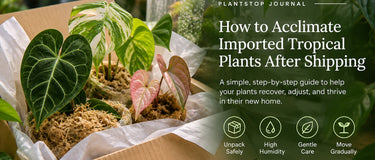
Receiving a new tropical plant is always exciting, especially when it's a rare Hoya, Anthurium, Monstera, or Philodendron you've been waiting to add to your collection.
But after traveling hundreds or even thousands of miles, your plant may need time to adjust to its new environment.
At Plantstop, we work with rare tropical plants sourced from Indonesia and understand how important the first few weeks can be for their long-term health.
Whether you're welcoming your first imported plant or expanding an established collection, these seven practical tips will help you create a smoother transition.
1. Unpack Your Plant Carefully
Once your package arrives, open it as soon as reasonably possible.
Carefully remove the protective packaging and inspect the leaves, stems, roots (when visible), and growing medium.
Some temporary drooping, minor leaf damage, or yellowing can occur after shipping. These symptoms do not always mean your plant is unhealthy.
Check for:
-
Broken stems or damaged leaves
-
Excessively wet or dry growing medium
-
Unusual odors or soft, rotting tissue
-
Visible pests or suspicious spots
-
Signs of dehydration or prolonged moisture exposure
Take clear photographs of your plant upon arrival, particularly if you notice any concerns.
Plantstop Tip: If your plant arrives with significant damage or health concerns, contact our team promptly with photos or an unboxing video. For delivery-related claims, please review our Return, Replacement, and Refund Policy and its applicable reporting deadlines.
2. Start With Gentle, Indirect Light
Avoid placing a newly imported plant directly under intense sunlight.
After spending time inside a shipping box, its leaves may be more sensitive to sudden environmental changes.
Choose a location with bright, indirect light. For many tropical foliage plants, this provides enough light to support recovery without adding unnecessary stress.
Avoid placing the plant directly beside heating vents, air conditioners, or cold windows.
Remember: More light doesn't always mean faster recovery. Consistent, appropriate conditions are often more helpful than sudden changes.
3. Maintain Appropriate Humidity
Many tropical plants appreciate higher humidity, particularly while adjusting after shipping.
For humidity-loving species, a clear acclimation box or enclosed growing area can help reduce moisture loss.
Some growers use approximately 70–80% relative humidity during the initial acclimation period, but this is not a universal requirement.
Provide airflow, monitor condensation, and avoid keeping leaves constantly wet. Excessive moisture and stagnant air can encourage disease.
Gradually introduce the plant to your normal growing conditions rather than making sudden changes.
A Little Inspiration for Tropical Plant Lovers
If you love the intricate leaf patterns of Hoyas or the dramatic foliage of Anthuriums, understanding their preferred growing conditions makes collecting them even more rewarding.
From beautifully veined foliage to unusual leaf shapes, these tropical plants offer something special for every collector.
Explore our Hoya and other rare tropical plants, sourced from growers in Indonesia.
The more you understand your plants, the more rewarding your growing journey becomes.
4. Check the Growing Medium Before Watering
Newly arrived plants may be packed in sphagnum moss or another moisture-retaining medium.
Before watering, check whether the medium is already moist.
If it feels wet, wait and monitor the plant. If it has become excessively dry, rehydrate carefully according to the species and condition of its roots.
Avoid watering automatically just because the plant has arrived.
A stressed plant may use water more slowly than usual, and overly wet growing medium can increase the risk of root problems.
Plantstop Tip: When plants arrive in sphagnum moss, keeping the medium lightly moist rather than saturated is often a good starting point. Always adjust your watering based on the actual condition of the roots and medium.
5. Avoid Repotting Immediately Unless Necessary
Repotting can add additional stress to a plant that is already adjusting to shipping.
If the roots and growing medium appear healthy, allowing the plant to settle before repotting is often a reasonable approach.
For many plants, waiting approximately 7–14 days before making major changes can be helpful, although some may require longer.
However, if you discover root rot, severely degraded medium, or another urgent problem, intervention may be necessary.
Always prioritize the actual condition of the plant.
Discover Your Next Tropical Favorite
Every plant has its own personality, from the sculptural leaves of Monstera to the intricate venation of rare Hoyas and Anthuriums.
At Plantstop, our Fresh Import collection features tropical plants sourced from Indonesia, including collector favorites and unusual varieties.
Whether you're drawn to variegated foliage, dramatic leaf shapes, or rare species, there's always something new to discover.
Explore the Fresh Import Collection →
6. Monitor Your Plant During the First Two Weeks
For the next 7–14 days, observe your plant regularly.
Pay attention to:
-
Leaf firmness and overall appearance
-
New yellowing or discoloration
-
Growing medium moisture
-
Root condition, when visible
-
Signs of pests or disease
-
Any gradual improvement or decline
Some plants adjust quickly, while others may require several weeks or longer.
Avoid fertilizing a severely stressed plant until it is showing signs of recovery.
It's also a good idea to keep newly arrived plants separate from your established collection initially. This gives you time to monitor for pests or other issues before introducing them to nearby plants.
Remember that new leaf growth may take time. A plant can be recovering even when there are no immediate visible changes.
7. Gradually Transition to Your Growing Environment
Once your plant is stable, gradually adjust humidity, airflow, and lighting toward its long-term growing conditions.
Avoid sudden changes.
A plant that has been growing in an enclosed environment may need additional time to adapt to typical household humidity.
For example, you can gradually increase ventilation in an acclimation box while monitoring the plant's response.
If the leaves begin to lose firmness or show signs of stress, slow down the transition and reassess the conditions.
Patience is one of the most important parts of successful acclimation.
Final Thoughts: Give Your Plants Time to Thrive
Every tropical plant is different, and successful acclimation depends on the species, shipping conditions, root health, and growing environment.
The first few weeks are about creating stability, observing your plant, and giving it time to adjust.
With thoughtful care and a little patience, newly arrived tropical plants can gradually adapt and become a beautiful part of your collection.
At Plantstop, we're passionate about connecting plant lovers with rare tropical plants from Indonesia.
Through our Fresh Import service, plants travel from Indonesia to our U.S. handling facility in New Jersey, where they are processed and prepared for domestic delivery.
Our goal is to make discovering and growing extraordinary tropical plants a rewarding experience.
Ready to discover your next favorite plant?
Explore Rare Tropical Plants at Plantstop
Happy growing!
The Plantstop Team