


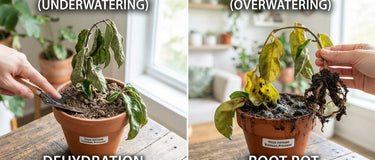
Hoya plants are loved for their beautiful foliage, unusual leaf shapes, and remarkable diversity. But even experienced collectors sometimes notice something concerning: leaves that were once firm and plump begin to wrinkle, soften, or lose their usual appearance.
The first instinct is often to water the plant immediately.
However, wrinkled Hoya leaves do not always mean the plant is thirsty. In some cases, the growing medium may already be too wet, and the roots may be struggling to absorb water.
Understanding the difference between dehydration and root problems can help you avoid making a stressed plant worse.
Why Do Hoya Leaves Become Wrinkled?
Many Hoya species have relatively thick leaves that store some moisture. When water availability or uptake becomes inadequate, those leaves may gradually lose firmness.
Several conditions can contribute to this appearance:
-
The growing medium has become excessively dry.
-
Roots have been damaged by prolonged wet conditions.
-
The plant has recently experienced shipping or environmental stress.
-
A cutting has not developed enough functional roots.
-
Changes in temperature, humidity, or light have affected water demand.
The important distinction is that visible dehydration does not always mean the roots need more water.
A plant can show signs of water stress even when its potting medium is wet because damaged roots may no longer absorb water effectively.
1. Check the Growing Medium Before Watering
Before reaching for your watering can, examine the condition of the growing medium.
If the medium is dry
A Hoya growing in a very dry substrate may begin to lose leaf firmness because its roots cannot obtain enough moisture.
Check several areas of the pot rather than judging only by the surface. Depending on the medium, you can use a wooden skewer, your finger, or the weight of the container to estimate moisture.
If the root system appears healthy and the substrate is genuinely too dry, water thoroughly and allow excess water to drain.
Very dry potting media can sometimes resist absorbing water evenly. In that case, gradual rewetting may be necessary.
If the medium is wet
Wrinkled leaves combined with persistently wet substrate deserve closer attention.
Excess moisture can reduce oxygen availability around the roots. Over time, stressed roots may become damaged, and root rot organisms can develop under favorable conditions.
Adding more water without investigating the problem can make the situation worse.
The University of Maryland Extension explains that overwatered houseplants can display symptoms resembling drought stress because damaged roots are unable to take up sufficient water.
Key takeaway: Always check the growing medium before deciding whether your Hoya needs water.
2. Inspect the Roots When Necessary
If your Hoya continues to decline despite apparently adequate moisture, inspecting its roots may help identify the problem.
Gently remove the plant from its container if you suspect serious root damage. Avoid unnecessarily disturbing healthy roots, especially on newly imported or recently repotted plants.
Signs of potentially healthy roots
Healthy roots are generally firm and structurally intact. Their color varies with the species, growing medium, and age.
Some roots may naturally appear tan or darker because of staining from moss or organic material.
Color alone is not enough to diagnose root rot.
Signs of possible root damage
Look for roots that are:
-
Soft, mushy, or collapsing
-
Easily separated from their outer tissue
-
Severely reduced in quantity
-
Associated with an unpleasant decaying smell
-
Accompanied by softening or darkening at the stem base
If roots are damaged, the plant may struggle to absorb moisture even though the medium is wet.
The University of Maryland Extension identifies softened, discolored roots and wilting as common indicators associated with root rot.
Remember that a definitive diagnosis of the underlying pathogen may require laboratory testing.
3. What to Do If Your Hoya Is Dehydrated
If the roots are healthy and the medium is too dry, recovery may be relatively straightforward.
Start by watering the plant appropriately and allowing the substrate to absorb moisture evenly.
Place the Hoya in stable conditions with suitable indirect light and temperatures appropriate for the species.
Avoid sudden changes in location, intense direct sunlight, or unnecessary repotting while the plant is stressed.
If the indoor air is particularly dry, maintaining appropriate humidity may reduce additional moisture stress. However, humidity should support healthy root function, not replace proper watering.
Do not expect every wrinkled leaf to become perfectly smooth again. Recovery depends on the severity and duration of stress, the condition of the roots, and the individual plant.
Instead of focusing only on old leaves, observe whether the plant stabilizes and eventually produces healthy new growth.
4. What to Do If You Suspect Root Rot
If the roots are soft, collapsing, or clearly decayed, simply allowing the surface of the medium to dry may not be enough.
Remove the plant carefully and inspect the root system.
Trim clearly decayed roots using clean tools, taking care to preserve healthy tissue. If the growing medium is decomposed or remains excessively wet, replace it with a fresh, appropriately draining medium.
Choose a container with drainage holes and avoid moving a weakened plant into an unnecessarily large pot.
A large volume of wet substrate around a small root system can make moisture management more difficult.
If very few functional roots remain, a healthy stem cutting may offer another opportunity to preserve the plant. Use clean equipment and an appropriate propagation environment.
There is no guaranteed recovery method for severe root damage. Success depends on how much healthy tissue remains and whether the conditions causing the problem have been corrected.
5. Choosing the Right Growing Medium
There is no single perfect substrate for every Hoya.
Different species, root systems, and growing environments require different approaches.
A well-managed Hoya growing medium should generally provide an appropriate balance of moisture retention and aeration.
Depending on the species and growing conditions, growers may use combinations of materials such as coconut husk chips, perlite, bark, and sphagnum moss.
The important question is not simply whether a medium is labeled “chunky” or “well-draining.”
Consider how quickly it dries in your particular environment, how much moisture it retains near the roots, and whether the container allows excess water to escape.
A plant in a warm, bright growing space may use water differently from the same species in a cooler room with limited winter light.
For collectors interested in exploring different leaf textures and growing habits, the Hoya collection at Plantstop offers examples of the diversity found within this genus.
EXPLORE PLANTSTOP
Discover More Hoya Varieties
From distinctive foliage to rare collector favorites, explore the diversity of Hoya plants at Plantstop.
Explore Hoya Collection6. Why Newly Shipped Hoya Plants Need Extra Attention
Shipping introduces another variable.
During transportation, plants may experience changes in temperature, light, humidity, and access to moisture.
A newly arrived Hoya may temporarily appear less firm than it did before shipping.
However, shipping stress should not automatically be blamed for every symptom.
Start by checking the condition of the plant and its growing medium. Avoid immediately repotting or heavily watering a plant solely because its leaves look slightly soft.
Keep the plant in a stable environment and monitor it closely.
For newly imported plants, allow time for acclimation while remaining alert to signs of serious root or stem damage.
Plantstop offers both established domestic inventory and imported tropical plants. Readers considering new additions can learn more about the company's fulfillment process in the Plantstop Fresh Import FAQ.
7. How to Prevent Wrinkled Hoya Leaves
Prevention starts with observing your plant rather than following a rigid watering calendar.
Check moisture regularly, but water according to the plant's actual needs.
Pay attention to the relationship between light, temperature, humidity, and the growing medium.
Inspect roots when there is a clear reason to suspect a problem, rather than repeatedly disturbing them.
Avoid allowing water to collect around the base of a container for extended periods.
During cooler months, remember that reduced light and slower growth may change how quickly the substrate dries.
A healthy growing routine should be flexible enough to accommodate these changes.
Most importantly, learn what normal foliage firmness looks like for each Hoya in your collection. Naturally thin, textured, or unusual leaves should not all be judged by the appearance of thick-leaved species.
Frequently Asked Questions
Should I water my Hoya immediately if the leaves are wrinkled?
Not necessarily. Check the growing medium first. If it is dry and the roots are healthy, watering may help. If the medium is already wet, investigate possible root problems before adding more water.
Can a Hoya recover from wrinkled leaves?
Yes, some plants recover when the underlying cause is corrected. However, severely damaged leaves may not regain their original appearance. Healthy new growth is often a more useful indicator of recovery.
Can root rot make Hoya leaves look dehydrated?
Yes. Damaged roots may be unable to absorb sufficient water, causing wilting or loss of leaf firmness even when moisture is present in the substrate.
Should I repot a newly imported Hoya immediately?
Not automatically. Consider the condition of the roots, the growing medium, and the overall health of the plant. Unnecessary repotting can add stress, but serious root problems may require prompt intervention.
Final Thoughts
Wrinkled Hoya leaves are a signal to investigate, not an automatic instruction to water.
By checking the substrate, evaluating root health, and considering recent environmental changes, you can make a more informed decision about what your plant actually needs.
The goal is not to follow one universal Hoya care formula. It is to understand the conditions that allow each plant to maintain healthy roots, stable hydration, and sustainable growth.
With careful observation and a little patience, even challenging Hoya varieties can become easier to understand.